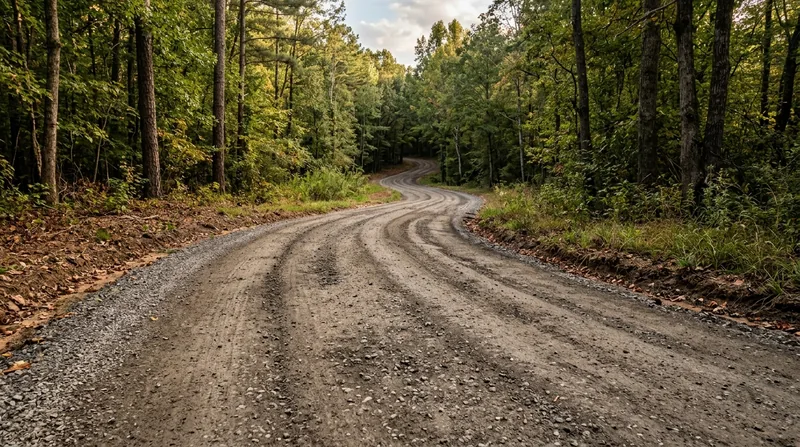




Recycled asphalt and millings driveways in Durham offer a firm, low-cost surface for properties built on the dense red clay that dominates the Piedmont terrain. This iron-rich soil swells when wet and softens through long rainy spells, so a durable driveway here must shed water and sit on a properly compacted base. Recycled millings (RAP, or reclaimed asphalt pavement) give you a proven alternative to new hot mix asphalt, especially on rural drives, HOA roads, and residential lanes where the grade is irregular and water management matters more than mirror-smooth appearance. We compact the millings in layers so the drive sheds water instead of holding it through Durham's wet winters and humid summers. Since 2009, we have built recycled asphalt surfaces across Durham, Chapel Hill, Cary, and the surrounding Triangle, and we can walk you through the cost, the process, and whether millings or hot mix asphalt is the right call for your property.
Why Recycled Asphalt Millings Matter in Durham: Clay, Water, and Durability
Durham's older neighborhoods sit on rolling Piedmont slopes where driveways curve down to garages set below street level, and newer subdivisions spread across Wake, Alamance, and Chatham counties on lots cut straight out of dense clay. That clay is the real problem. When water sits in compacted clay, the ground heaves and settles with the seasons, cracking and displacing asphalt laid on top of it. Recycled millings, properly graded and compacted in lifts, create a permeable, flexible surface that moves with the ground and lets water drain through instead of pooling underneath.
- Recycled millings knit together under traffic and compaction, forming a bound surface that hardens over time without the brittleness of thin new asphalt.
- The material costs less than new hot mix asphalt and requires no plant mixing or laying crew specialized in hot-pour temperatures.
- Millings perform best on rural, residential, and private-road applications where appearance takes a back seat to function and water management.
- Each lift must be compacted and watered to lock the particles together, so the finished drive is only as good as the base and the compaction effort.
Proper compaction and layering are what separate a durable recycled asphalt driveway from one that ruts and ravels within a season.
Key info: Durham's clay-heavy terrain and moderate freeze-thaw cycles (about a dozen crossings per winter) do not tear recycled asphalt apart the way deep cold does in northern climates. The real killer here is water: standing water in the subgrade softens the clay and breaks the bond between millings. A drive pitched to shed water and built on a compacted aggregate base will last 7 to 10 years or more before needing rework.
For permitting and HOA approval, check with your local building department or HOA covenants. Base preparation and grading are construction work, not engineering, but your municipality may require a driveway apron permit or a stormwater plan if the drive extends or changes drainage. We help you navigate those requirements.
How We Build Recycled Asphalt Driveways: Layers, Compaction, and Drainage
A recycled asphalt driveway is built in lifts, not poured all at once. Each layer of millings must be spread, watered, and compacted before the next one goes down. The process takes longer than a day, but the result is a surface that locks together and stays firm under load. We grade the subgrade, lay a compacted aggregate base (crushed stone), then add recycled asphalt in 2 to 4 inch lifts, compacting and watering each one until the millings knit together and the drive is crowned for drainage.
- We clear the existing surface and grade the subgrade so water runs off the drive, not into it.
- A 4 to 6 inch compacted crushed stone base is laid and proof-rolled to ensure it will not settle under traffic.
- Recycled asphalt millings are spread in 2 to 3 inch lifts, watered, and compacted with a vibratory roller until the particles lock together.
- The final crown and edge are shaped to shed water toward the sides and prevent ponding at the low end.
- The drive is ready for light use immediately and reaches full strength within a few weeks as traffic and weather bond the millings further.
The key to longevity is compaction and base preparation, not speed.
Local example: A residential driveway in Hillsborough on a sloped lot with clay subgrade received a 6 inch compacted stone base and 3 lifts of recycled asphalt, totaling 9 inches of bound material. The drive has been in service for 8 years with only routine grading after heavy rain; no ruts or potholes. The same lot with a thin asphalt overlay over the old clay subgrade would have failed within 3 years.
If your driveway is already failing, we evaluate whether repair or full replacement makes sense. Extensive cracking, rutting, or a soft base usually means the old surface must come out before recycled asphalt goes in.
Methods and Materials: Recycled Asphalt vs. New Hot Mix vs. Gravel
| Approach | Description | Best for |
|---|---|---|
| Recycled Asphalt Millings | Reclaimed asphalt pavement compacted in layers, binds over time, permeable base. | Rural and residential driveways, private roads, water management on clay terrain. |
| New Hot Mix Asphalt | Plant-mixed, laid hot, compacted immediately, sealed surface, polished appearance. | Residential driveways, parking lots, high-traffic areas requiring a finished look. |
| Asphalt Overlay | New hot mix laid over existing asphalt if the base is sound, 1.5 to 2 inches. | Resurfacing a driveway with minor cracking and a stable subgrade. |
| Gravel or Crushed Stone | Loose aggregate, requires annual raking and topping, permeable, minimal cost. | Long rural drives, temporary access roads, budget-limited properties. |
Recycled asphalt sits between gravel and new hot mix in cost and performance. It binds over time, sheds water, and lasts longer than loose gravel, but it is not as polished or as durable as new asphalt on a high-traffic residential drive. Choose millings when you want durability on a rural or private road, water management on clay, and lower upfront cost than new asphalt.
Recycled Asphalt and Millings Driveways Cost in Durham: What to Expect
Recycled asphalt millings driveways start at around $3 per square foot for the material and labor to prepare the base, lay the millings, and compact them properly. A 500 square foot residential driveway in Durham typically runs $1,500 to $2,500 depending on the subgrade condition, base preparation, and how many lifts of millings are needed. Longer rural drives and private roads cost more in total but may be lower per square foot because the work is continuous and equipment sits in one place.
What moves the cost up or down:
- Subgrade condition: clay that is soft or poorly compacted requires more aggressive grading and a thicker stone base, adding labor and material.
- Drainage and slope: drives on flat terrain or with standing water issues need additional grading and possibly a swale or culvert, which adds cost.
- Existing surface removal: if the old asphalt or concrete must come out, that is a separate line item.
- Distance and site access: tight lots, narrow gates, or long walks from the truck add labor time.
- Tonnage and volume: we provide written estimates with tonnage specs so you know exactly what you are buying.
Get two or three estimates from local contractors. A written estimate should include the subgrade preparation, base thickness, millings tonnage, and compaction method. Avoid estimates that lump everything into a flat square-foot price without detail. See our pricing guide for more context on what factors into the final number.
Real example: A 1,200 square foot driveway in Chapel Hill with a soft clay subgrade and poor drainage cost $3,900 (about $3.25 per square foot) because 8 inches of compacted stone base was needed before the millings went down. The same driveway on a gravel lot with existing good drainage would have run $2,800 because less base preparation was required. The difference is always in the ground.
Call (984) 257-4541 for a free estimate. We measure your driveway, look at the subgrade and drainage, and give you a written quote with tonnage and labor spelled out. No obligation to book.
Recycled Asphalt and Millings Driveways Near Me: What Durham Homeowners Should Know Before Hiring
Hiring a contractor for recycled asphalt or any paving work should start with verification, not a sales pitch. Get a written estimate that includes the work scope, material specs, tonnage, and labor timeline. Check references from local properties, not a list provided by the contractor. Ask about base preparation, compaction method, and drainage because those are where the real work happens. Understand your local permitting rules: Durham and surrounding municipalities have different rules for driveway aprons, culvert work, and impervious surface limits, so check with your building department or HOA before you commit.
- Verify the contractor is fully insured and ask to see a certificate of insurance naming you as an additional insured.
- Get a written contract that describes the work, materials, timeline, and payment schedule before any work starts.
- Request references from recent residential or private-road work in Durham or nearby towns, and call them.
- Ask whether the estimate includes site cleanup, grading, and base preparation, or if those are separate charges.
- Understand your HOA or municipal permitting: some jurisdictions require an apron permit or a stormwater plan for driveway work.
- Avoid unsolicited door-to-door offers, cash-only deals, out-of-state crews, or prices that seem too good to be true, all common markers of paving scams.
We are a local Durham shop with local plates and a local address. We have been in business since 2009, and we stand behind our work with a workmanship warranty. Call (984) 257-4541 to talk through your driveway, get a free estimate, or ask about new asphalt paving or resurfacing if recycled asphalt is not the right fit.
Recycled Asphalt & Millings Driveways in Durham: Pricing Guide
| Service | Price | Details |
|---|---|---|
| Recycled Asphalt Millings (per sq ft) | Starting at $3/sq ft | Material and labor to prepare base, lay millings in lifts, compact, and shape for drainage |
| Base preparation and grading | Included in quote | Subgrade grading and 4 to 6 inches of compacted crushed stone, cost varies by soil condition and slope |
| Existing asphalt or concrete removal | On estimate | Required if old surface must come out before new millings are laid, price depends on size and haul distance |
| Private road or multi-property job | On estimate | Larger tonnage and longer compaction runs lower the per-square-foot cost, but total price requires site visit |
| Estimate | Free | We measure, inspect the subgrade, and provide written quote with tonnage and labor detail within 24 hours |
Indicative pricing, the exact cost depends on square footage, finish, and site access. Free personalized estimate within 24h at (984) 257-4541.


