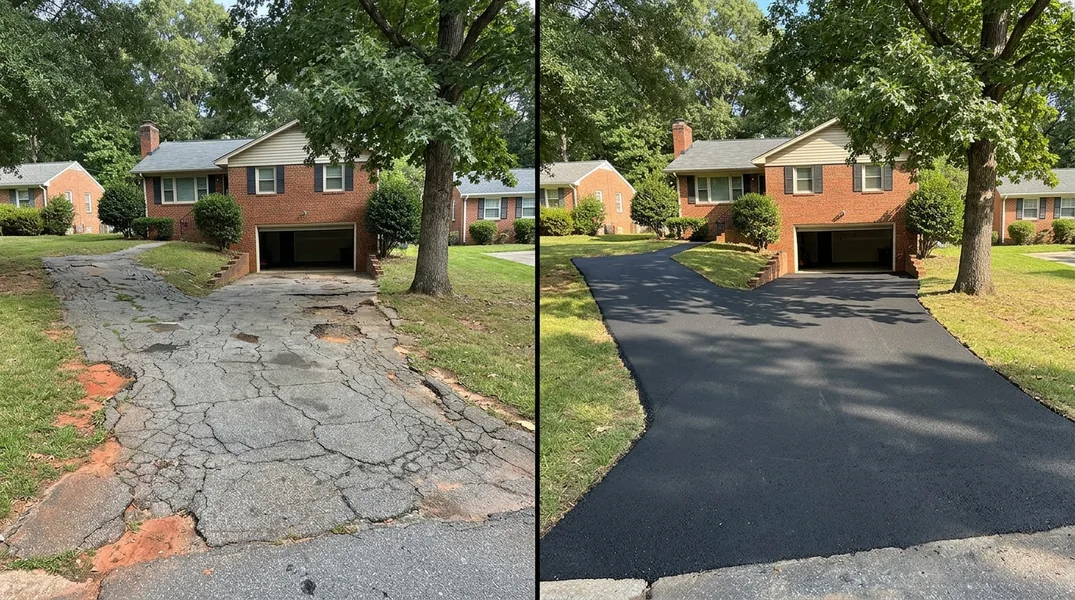
The Real Enemy: Piedmont Clay, Not Freezing Temperatures
Most homeowners in Durham assume their driveway damage comes from winter freeze-thaw cycles. While cold weather certainly takes its toll in northern states, the truth for our region is quite different. The Piedmont region of North Carolina, where Durham sits, is built on expansive clay soils that are far more destructive to asphalt than any winter frost could be.
Piedmont clay has a unique characteristic: it expands when wet and contracts when dry. This constant movement creates stress on the asphalt layer above it. As the clay shifts beneath your driveway, it causes the asphalt to crack, settle unevenly, and eventually fail. Unlike the dramatic ice damage you might see in New England or the Midwest, clay damage in Durham is insidious and progressive. Many homeowners don't realize what's happening until the damage becomes severe enough to require significant repairs.
How Piedmont Clay Damages Your Driveway Over Time
The damage cycle begins with rainfall. When water saturates the Piedmont clay beneath your driveway, the clay expands. This expansion pushes upward on the asphalt, creating stress points. The asphalt, being a relatively rigid material, responds by cracking. These cracks are not random. They typically follow patterns that reflect the underlying soil movement, often appearing as alligator cracking or linear cracks that run perpendicular to the direction of maximum soil expansion.
Once cracks form, water infiltrates deeper into the base layers of your driveway. This accelerates the deterioration process because water continues to trigger clay expansion cycles. During dry periods, the clay shrinks, and the asphalt settles unevenly. This creates low spots where water pools, leading to more infiltration and faster degradation. Over one to three years, small cracks can become large fissures. Within five to seven years, you may be facing Pothole Repair & Asphalt Patching needs or even a complete driveway replacement.
Recognizing Early Signs of Clay-Related Driveway Damage
Early detection is your best defense against expensive Driveway Repair bills. The first warning signs are subtle cracks that appear without obvious trauma to the surface. These cracks often form in patterns rather than isolated spots, and they tend to widen over weeks and months. If you notice your driveway developing a map-like pattern of cracks, clay movement is likely the culprit.
Another telltale sign is uneven settling. Walk your driveway and look for areas where the surface has sunk relative to neighboring sections. You might notice a slight lip or step where two sections meet. This settling is caused by differential clay movement, where some areas expand or contract more than others. Additionally, watch for water pooling in low spots after rain. Standing water indicates that your driveway's surface has lost its slope, another classic symptom of clay-induced damage. If you observe any of these signs, contact Durham Asphalt Paving at (984) 257-4541 for a professional assessment before the problem escalates.
Repair or Replace: Making the Right Decision for Your Driveway
When faced with a damaged driveway, homeowners must decide whether Driveway Repair is sufficient or if full replacement is necessary. This decision depends on the extent of the damage and the underlying cause. If your driveway has minor cracks and is less than ten years old, targeted Pothole Repair & Asphalt Patching combined with crack sealing may extend its life by several years. However, if the damage is widespread, multiple large potholes are present, or the surface has significant alligator cracking covering more than 25 percent of the area, replacement is usually more cost-effective than repair.
There is also a middle option: Asphalt Resurfacing & Overlay. This process involves applying a new layer of asphalt over the existing damaged surface, provided the base is still structurally sound. Resurfacing is less expensive than full removal and replacement, making it an attractive option for driveways that have failed due to surface wear rather than severe base failure. However, if the clay movement beneath your driveway is ongoing and severe, even resurfacing may only buy you a few more years before the problem resurfaces. A professional evaluation from Durham Asphalt Paving can help you understand which option makes sense for your specific situation and budget.
Long-Term Solutions to Protect Your Driveway from Clay Damage
Understanding that Piedmont clay is your driveway's true adversary allows you to take proactive steps to minimize damage. The most important factor is water management. Ensure your driveway has proper drainage and slopes away from your home. Direct downspouts away from the driveway, and consider installing French drains or swales to manage surface water runoff. By reducing the amount of water that reaches the clay beneath your asphalt, you reduce the expansion cycles that cause damage.
Regular maintenance also extends driveway life significantly. Seal coat your asphalt every two to three years to prevent water infiltration through the surface. This creates a protective barrier that keeps moisture from reaching the base layers. Address cracks promptly with professional crack sealing rather than ignoring them. Small repairs now prevent large repairs later. Additionally, avoid allowing heavy vehicles to park in the same spot repeatedly, as concentrated weight can accelerate settling in clay-prone areas. When planning a new Asphalt Driveway Paving & Installation project, discuss proper base preparation and drainage solutions with your contractor. A well-designed base with adequate compaction and drainage can significantly reduce clay-related problems.
Getting Professional Help for Your Durham Driveway
If you are experiencing driveway problems in Durham, don't wait until the damage becomes catastrophic. Durham Asphalt Paving specializes in understanding the unique challenges that Piedmont clay presents to local driveways. Our team can assess your driveway's condition, identify whether clay movement is the underlying cause, and recommend the most appropriate solution for your situation and budget.
Whether you need immediate Pothole Repair & Asphalt Patching, a full resurfacing project, or a complete driveway replacement, we have the expertise to deliver quality results that address the root cause of your problems. Contact us today at (984) 257-4541 or visit our website to request a free estimate. We serve the entire Durham area and are committed to helping you protect one of your home's most important assets.
Looking for a professional asphalt paving contractor in Durham? Durham Asphalt Paving responds fast for all your asphalt paving needs.
Get a Free Quote