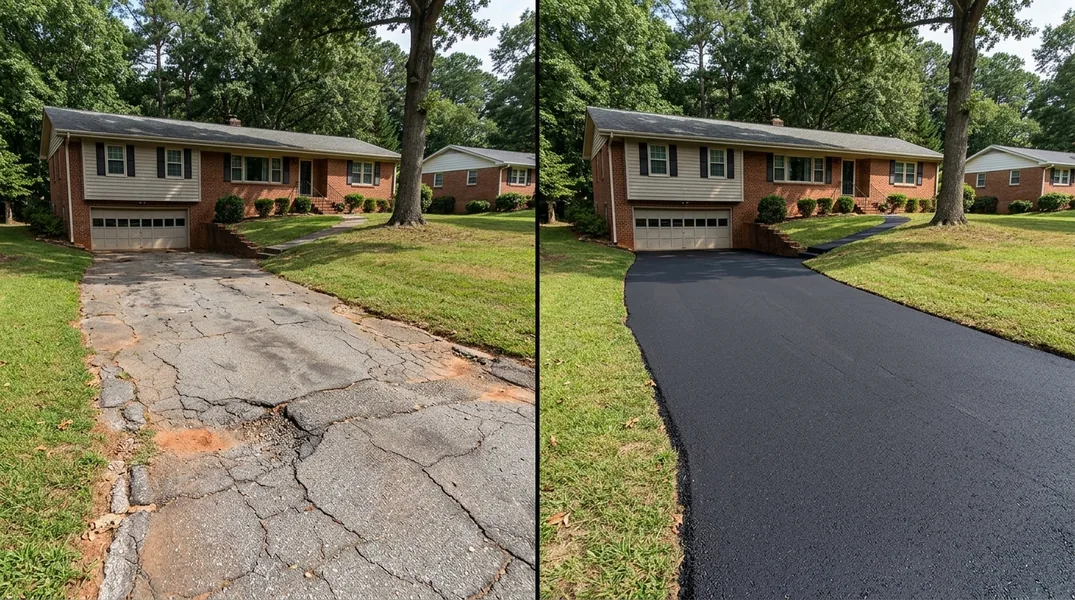
Understanding Asphalt Damage: What You're Really Looking At
Your driveway is one of the first things visitors notice about your home, and it takes a beating from weather, vehicle weight, and constant use. In Durham, where summer heat and spring rains create challenging conditions, asphalt damage can progress quickly if left unaddressed. But not all damage requires a complete replacement. Understanding the difference between surface-level wear and structural failure is the key to making the right decision for your property.
The most common types of asphalt damage fall into a few categories. Surface cracking, small potholes, and minor discoloration are typically signs of normal wear and tear. These issues usually respond well to Driveway Repair or targeted maintenance. However, extensive alligatoring (a pattern of interconnected cracks resembling alligator skin), large potholes, significant settling, or widespread deterioration often signal that the structural integrity of your asphalt has been compromised. At that point, repair alone won't solve the problem, and you'll need to consider more comprehensive solutions like Asphalt Resurfacing & Overlay or full replacement.
When Repair Is Enough: Catching Damage Early
The best time to address asphalt damage is when it first appears. Small cracks, minor surface deterioration, and isolated potholes are all candidates for repair rather than replacement. Pothole Repair & Asphalt Patching is a cost-effective solution that can extend your driveway's life by several years when performed promptly. If you notice a single pothole or a few linear cracks in an otherwise sound driveway, repair is almost always the right choice.
The key advantage of early repair is that it prevents water infiltration, which is the primary cause of accelerated asphalt deterioration. Once water seeps beneath the surface, it weakens the base layers and creates a domino effect of damage. Regular inspection of your driveway, especially after heavy rain or freeze-thaw cycles common in Durham, allows you to catch these issues before they spiral. Many homeowners find that investing in timely repairs saves them thousands of dollars compared to waiting until replacement becomes necessary.
Signs Your Driveway Needs Full Replacement, Not Repair
There comes a point where repair costs and frequency make replacement the more economical choice. If your driveway exhibits extensive alligatoring, large sections of missing asphalt, deep rutting, or widespread settlement, replacement is likely your best option. A general rule of thumb is that if repairs exceed 30 percent of the cost of replacement, or if you find yourself making repairs every season, full Asphalt Driveway Paving & Installation is more practical.
Another indicator is the age of your driveway. Most asphalt driveways last between 15 and 20 years under normal conditions, though Durham's climate can accelerate wear. If your driveway is approaching or past this age range and showing multiple types of damage simultaneously, replacement becomes the sensible investment. Additionally, if the base or subgrade beneath your asphalt has failed (evidenced by soft spots, severe settling, or large sections that shift under vehicle weight), patching won't help. The underlying structure must be rebuilt, which typically justifies a complete replacement rather than layering new asphalt over a failing foundation.
How Long for Asphalt to Cure and When You Can Drive On It
One of the most common questions homeowners ask after new asphalt installation is how long before you can drive on new asphalt. Understanding the curing timeline is important for protecting your investment and ensuring the asphalt reaches its full strength. The answer depends on several factors, including temperature, humidity, and the specific mix used by your contractor.
Freshly laid asphalt typically becomes hard enough for light foot traffic within 24 to 48 hours, but vehicle traffic is a different matter. Most contractors recommend waiting at least 48 to 72 hours before driving on new asphalt, though in cooler weather or with thicker applications, this timeframe may extend to a full week. How long for asphalt to cure completely is the more important question for durability. While the surface may feel solid after a few days, asphalt continues to cure and harden for up to six months. During this curing period, the binder in the asphalt mix continues to set, and the material becomes progressively more resistant to damage and deformation.
Temperature plays a critical role in curing speed. In warm conditions, asphalt cures faster because heat accelerates the chemical bonding process. Conversely, cool or rainy weather slows curing significantly. In Durham, where spring and fall temperatures can be unpredictable, your contractor will provide specific guidance based on weather conditions at the time of installation. To maximize the lifespan of your new asphalt and ensure proper curing, avoid heavy loads, sharp turns, and parking in the same spot during the first few weeks after installation.
New Asphalt Driveway Care: Protecting Your Investment
Once your new asphalt is installed and cured, proper maintenance becomes essential. New asphalt driveway care begins immediately and sets the tone for how long your driveway will last. The most important maintenance task is seal coating, which protects the asphalt from UV rays, water intrusion, and chemical damage. Many homeowners wonder how often to seal driveway surfaces to maintain optimal protection. The standard recommendation is to seal your driveway every two to three years, though this may vary based on traffic volume and local climate conditions.
Beyond seal coating, regular cleaning and prompt repair of small cracks prevent major damage from developing. Sweep your driveway regularly to remove debris, and wash away salt residue after winter weather, as salt accelerates deterioration. Avoid using harsh chemicals or de-icers that contain ammonium nitrate or ammonium sulfate, which can damage asphalt. If you notice small cracks appearing during the first year or two after installation, address them immediately before water penetrates the base. These preventive measures, combined with periodic professional inspection, can extend your driveway's life well beyond the typical 15 to 20 year range.
The investment you make in new asphalt driveway care pays dividends over time. A well-maintained driveway not only looks better and protects your home's curb appeal but also prevents costly structural damage that can affect your property's foundation and drainage. If you're unsure about the best maintenance schedule for your specific situation, Durham Asphalt Paving can provide personalized recommendations during a free estimate.
Making Your Decision: Repair, Resurface, or Replace
Deciding between repair, resurfacing, and replacement requires honest assessment of your driveway's current condition and your long-term goals. Start by documenting the extent and type of damage with photos. Are you dealing with isolated issues or widespread deterioration? Is the base solid, or do you feel soft spots when you walk on the driveway? How old is the asphalt? Answering these questions honestly helps guide your decision.
For most homeowners in Durham facing this choice, a professional evaluation is invaluable. The team at Durham Asphalt Paving can assess your driveway and recommend the most cost-effective solution for your situation. Whether that's targeted Driveway Repair, resurfacing to add new life to a structurally sound base, or complete replacement with new Asphalt Driveway Paving & Installation, the right choice depends on your specific circumstances. Call Durham Asphalt Paving at (984) 257-4541 today to discuss your driveway's needs and get a detailed assessment. Understanding the real damage on your driveway empowers you to make smart decisions that protect your investment and keep your property looking its best for years to come.
Looking for a professional asphalt paving contractor in Durham? Durham Asphalt Paving responds fast for all your asphalt paving needs.
Get a Free Quote