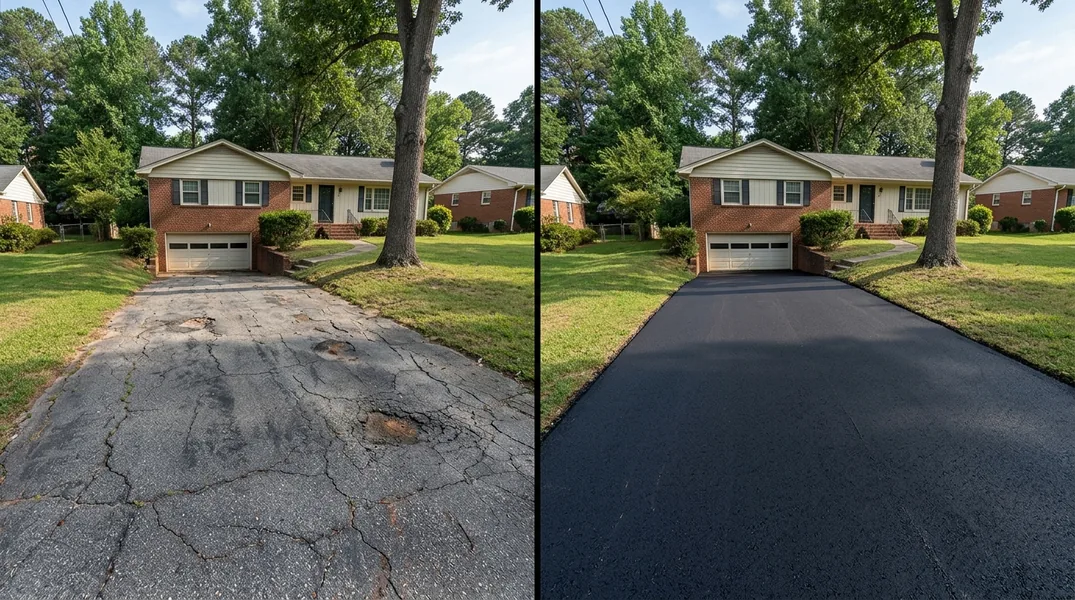
Understanding Durham's Clay and Seasonal Moisture Challenges
If you own a home in Durham, you've likely noticed how the soil behaves differently depending on the season. The region's characteristic red clay presents unique challenges for property owners, especially those with driveways. When heavy rains arrive or prolonged wet spells settle in, this clay becomes increasingly soft and unstable, creating a foundation problem that can compromise even a well-installed asphalt surface above it.
Clay soil expands when wet and contracts when dry, a process called hydration and desiccation. This constant movement weakens the base layer beneath your driveway, which is critical for long-term durability. A driveway's lifespan depends not just on the quality of the asphalt itself, but on the stability of what lies beneath. When the subgrade (the soil foundation) shifts and softens, even premium asphalt will eventually crack, settle unevenly, and deteriorate faster than expected. Understanding this local soil behavior is the first step toward protecting your investment in Durham.
Warning Signs Your Driveway Foundation Is Failing
Several visible indicators suggest that softened clay beneath your driveway is causing structural problems. The most obvious sign is standing water or puddles that persist long after rain stops. If water pools in certain areas of your driveway rather than draining naturally, this indicates that the base has settled or become uneven due to soil instability. Another red flag is the appearance of alligator cracking (small interconnected cracks resembling alligator skin), which typically signals that the foundation is shifting and the asphalt is being stressed from below.
You may also notice that your driveway has developed a noticeable slope or wave pattern, where one section is visibly higher or lower than an adjacent section. This differential settling is a classic symptom of uneven soil compaction or clay softening beneath specific areas. Additionally, if you see potholes appearing more frequently or if existing cracks seem to widen after each rainy spell, your driveway's base layer is likely compromised. Edge cracking, where the edges of the driveway break apart or crumble, is another indicator that moisture is penetrating the subgrade and destabilizing the entire structure.
Avoiding Leftover Asphalt Scams and Driveway Paving Scams
When your driveway shows signs of failure, unscrupulous contractors may approach you with offers that sound too good to be true. The leftover asphalt scam is particularly common in residential neighborhoods. These operators claim they have excess asphalt from a nearby job and can resurface your driveway at a steep discount if you act immediately. This high-pressure sales tactic preys on homeowners' desire to save money, but the reality is that leftover asphalt is often old, improperly stored, or of inferior quality. Once applied to your driveway, it may not bond properly, cure correctly, or last more than a season or two.
Beyond the leftover asphalt scheme, broader driveway paving scams include contractors who quote suspiciously low prices without conducting a proper site assessment, those who demand full payment upfront before any work begins, and operators who lack verifiable licenses or insurance. Some scammers will also misrepresent the condition of your driveway, recommending complete replacement when Asphalt Resurfacing & Overlay would suffice, or vice versa. A legitimate contractor will always inspect your driveway thoroughly, explain findings clearly, and provide a detailed written estimate before starting work. If someone pressures you to decide on the spot or claims their offer expires today, that's a strong warning sign to walk away.
How to Choose a Paving Contractor in Durham: Essential Questions
Selecting the right contractor is your best defense against scams and poor-quality work. Before hiring anyone, ask these critical questions to gauge their professionalism and expertise. First, inquire about their licensing, insurance, and bonding status. A legitimate contractor will provide proof of a valid state license, general liability insurance, and workers' compensation coverage. Ask how long they've been in business and request references from recent customers. A company with a solid track record will have no problem providing contact information for homeowners whose driveways they've completed in the past year.
Second, ask the contractor to explain their assessment process. How will they evaluate the condition of your driveway and the soil beneath it? Will they test drainage, probe the subgrade, or conduct any other diagnostic work? A thorough contractor will discuss these steps upfront rather than eyeballing your driveway and quoting a price on the spot. Third, ask about warranty coverage. What guarantees do they offer on materials and workmanship? How long does the warranty last, and what does it cover? Reputable contractors stand behind their work with written warranties.
Fourth, request a detailed written estimate that breaks down labor, materials, and any site preparation costs separately. Vague estimates that lump everything together are a red flag. Finally, ask about the specific products they'll use. Will they use virgin asphalt, recycled asphalt, or a blend? What thickness will they apply? These details matter for durability and performance. Durham Asphalt Paving is happy to answer all these questions and provide a comprehensive assessment of your driveway's condition.
When to Choose Asphalt Driveway Paving & Installation vs. Repair Options
Not every damaged driveway requires complete replacement. Understanding when to repair versus when to repave is essential for making a cost-effective decision. If your driveway has minor cracks, small potholes, or surface wear but the underlying structure is sound, Driveway Repair or Pothole Repair & Asphalt Patching may be sufficient. These targeted solutions address specific problem areas without the cost and disruption of a full installation. However, if your driveway is settling due to softened clay, has extensive alligator cracking across multiple sections, or is more than 15 to 20 years old, full replacement may be more economical in the long run.
A middle ground option is Asphalt Resurfacing & Overlay, which involves applying a new layer of asphalt over the existing surface. This approach works well if the underlying base is still structurally sound but the top layer has deteriorated. However, if the clay subgrade is softening and causing settlement, resurfacing alone won't solve the root problem. In such cases, proper base repair or stabilization must occur first. A qualified contractor will assess whether the foundation can be salvaged or if replacement is necessary. The key is getting a professional evaluation before committing to any solution.
Protecting Your Investment: Maintenance and Professional Guidance
Once you've invested in a quality driveway, protecting it from Durham's moisture challenges requires ongoing attention. Proper drainage is your first line of defense. Ensure that water doesn't pool on your driveway surface and that it drains away from the foundation of your home. If you notice standing water after rain, this is a sign that the base has settled or that drainage has been compromised. Consider installing or improving drainage systems around the driveway perimeter if water consistently accumulates in certain spots.
Regular maintenance also extends driveway life significantly. Seal coating your asphalt every two to three years protects it from UV damage, moisture penetration, and oxidation. This preventive step is especially important in Durham, where wet spells can saturate the asphalt and accelerate deterioration. Fill small cracks promptly to prevent water from seeping into the base layer, where it will soften the clay and cause further damage. Avoid using salt-based deicers in winter, as these can accelerate asphalt breakdown and increase soil moisture issues.
Most importantly, have your driveway inspected by a professional annually or after severe weather events. Early detection of problems like soft spots, new cracks, or drainage issues allows for timely intervention before damage becomes extensive and costly. Durham Asphalt Paving offers comprehensive assessments and can recommend the best maintenance or repair strategy for your specific situation. Call us at (984) 257-4541 or request a free estimate to discuss your driveway's condition and learn how to protect your investment for years to come.
Looking for a professional asphalt paving contractor in Durham? Durham Asphalt Paving responds fast for all your asphalt paving needs.
Get a Free Quote